

Negative thoughts can affect almost every part of our lives, from relationships and work to sleep and confidence. Sometimes, we keep thinking about past mistakes, worrying about the future, or imagining situations that may never happen. These thoughts can make even an ordinary day feel stressful and exhausting. But is it possible to control negative thinking and develop a healthier mindset? Yes! With consistent practice, self-awareness, and the right support, you can learn to respond to negative thoughts more effectively.
Understanding how to stop negative thoughts is an important step towards improving emotional well-being. Let’s explore some practical techniques that can help you feel calmer, develop confidence, and enjoy everyday life.
What Are Negative Thoughts?
Negative thoughts are unwanted or unhelpful ideas that influence how we see ourselves, other people, and the world around us. They may include thoughts such as “I am not good enough,” “Something bad will happen,” or “I will never succeed.” Although occasional negative thinking is a normal human experience, repeatedly believing these thoughts can affect emotional health.
Sometimes, negative thoughts develop automatically without any obvious reason. For example, receiving criticism at work may make someone believe they are unsuccessful, even when they have achieved many things. Recognising these thinking patterns is the first step towards changing them.
Common Causes of Negative Thinking
Several factors can contribute to negative thinking. Work pressure, financial concerns, relationship difficulties, loneliness, sleep problems, and challenging life experiences can influence our emotional well-being. Anxiety and depression can also involve persistent negative thinking.
Comparing yourself with others, expecting perfection, and constantly worrying about future situations can make the problem worse. Understanding your personal triggers can help you identify situations that increase negative thoughts and develop healthier ways to manage them.
10 Effective Ways to Stop Negative Thoughts
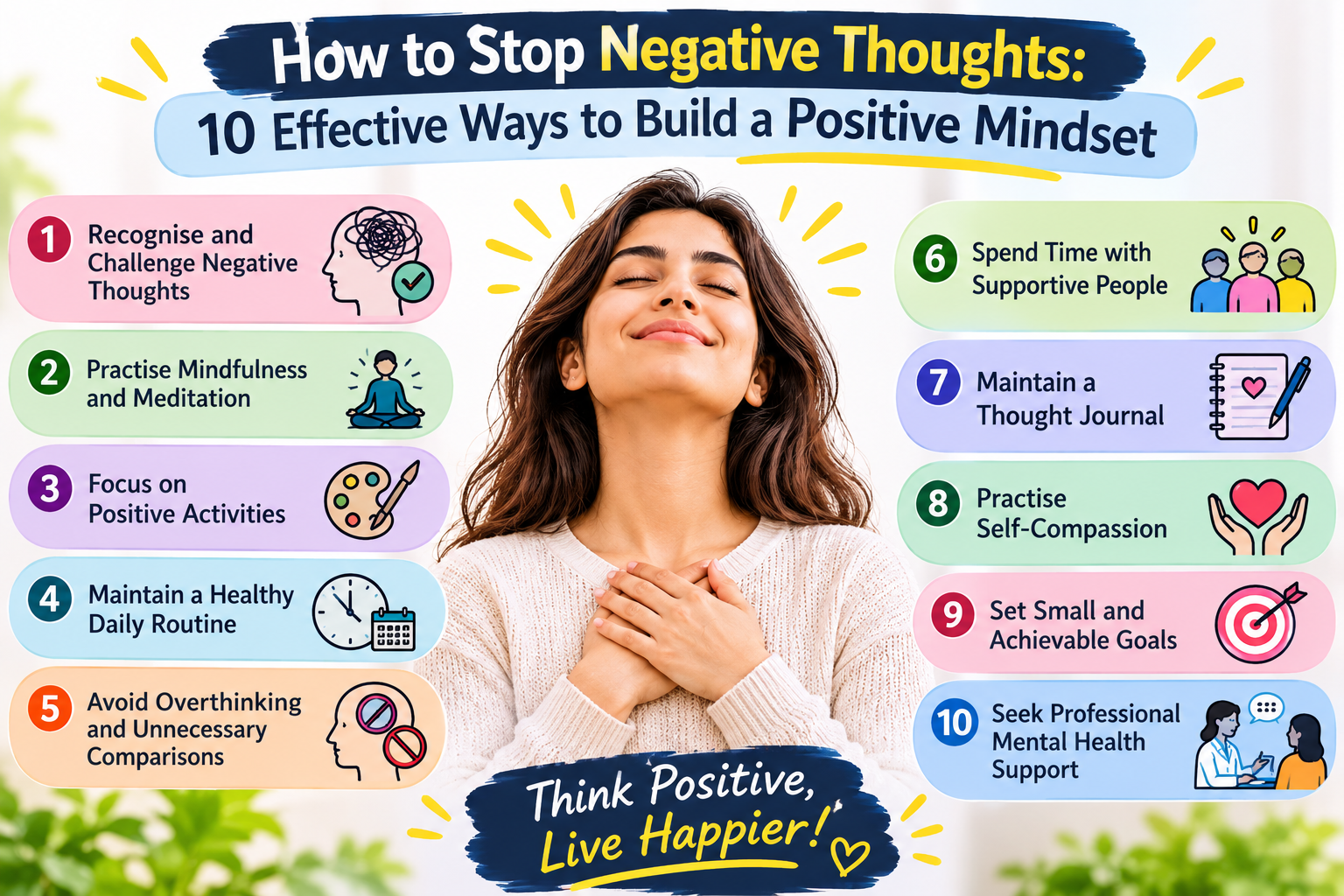
1. Recognise and Challenge Negative Thoughts
The first step is becoming aware of what you are thinking. Instead of immediately believing every negative thought, pause and ask yourself whether it is supported by facts. For example, if you think, “I always fail,” remember situations where you successfully completed something challenging. Try replacing extreme statements with realistic alternatives, such as “I made a mistake, but I can learn from it.” This technique is commonly used in Cognitive Behavioural Therapy (CBT), which helps people identify and change unhelpful thinking patterns.
2. Practise Mindfulness and Meditation
Mindfulness helps you pay attention to the present moment rather than constantly worrying about the past or future. Spend five to ten minutes focusing on your breathing, bodily sensations, or surroundings. When negative thoughts appear, acknowledge them without judging yourself and gently return your attention to the present. Meditation does not mean forcing your mind to become completely empty. Instead, it teaches you to observe thoughts without allowing them to control every emotion or decision.
3. Focus on Positive Activities
Your daily activities can influence your mood. Spending time on hobbies, listening to music, reading books, gardening, or enjoying nature can provide a healthy break from repetitive worrying. Physical activities such as walking, cycling, or yoga may also support emotional well-being. Start with activities you genuinely enjoy instead of forcing yourself to follow an unrealistic schedule. Small enjoyable experiences can gradually help you create a more balanced daily routine.
4. Maintain a Healthy Daily Routine
Sleep, nutrition, and physical activity play important roles in mental well-being. Try maintaining consistent sleeping and waking times, eating balanced meals, drinking enough water, and getting regular exercise. Poor sleep can make it harder to manage emotions and concentrate on everyday responsibilities. Avoid excessive caffeine if it increases restlessness or anxiety. A healthy routine cannot solve every emotional difficulty, but it can provide a stronger foundation for managing stress.
5. Avoid Overthinking and Unnecessary Comparisons
Constantly comparing your achievements, appearance, or lifestyle with others can damage your confidence. Remember that social media usually shows selected moments rather than someone’s complete life. If online content makes you feel inadequate, consider reducing your screen time or unfollowing accounts that negatively affect your mood. When you start overthinking, identify whether there is an actual problem that requires action. If there is, focus on one practical solution instead of repeatedly imagining different negative outcomes.
6. Spend Time with Supportive People
Talking to someone you trust can make difficult emotions easier to manage. Friends, family members, and supportive colleagues may offer encouragement and a different perspective. You do not always need someone to provide solutions; sometimes, simply expressing your feelings can help you feel understood. Avoid isolating yourself when you are struggling emotionally. Building healthy social connections can help you feel less alone and more confident when facing life’s challenges.
7. Maintain a Thought Journal
Writing down your thoughts is a useful way to understand emotional triggers. Whenever you feel overwhelmed, record what happened, what you thought, and how you felt. Then consider whether your interpretation was completely accurate or whether another explanation is possible. Over time, your journal may reveal recurring patterns, such as worrying before important meetings or feeling anxious after particular interactions. These observations can help you identify areas where you need emotional support or practical changes.
8. Practise Self-Compassion
Many people speak to themselves more harshly than they would ever speak to a friend. They repeatedly blame themselves for mistakes and forget that everyone experiences difficulties. Instead of saying, “I am useless,” try saying, “I am learning, and I can improve.” Accepting imperfections does not mean avoiding responsibility. It means recognising that mistakes are part of personal growth and treating yourself with patience during difficult situations.
9. Set Small and Achievable Goals
When everything feels overwhelming, breaking responsibilities into smaller tasks can make life more manageable. Instead of worrying about completing an entire project, focus on the first step. Celebrate small achievements, whether they involve finishing a task, exercising, or maintaining a healthy routine. Achievable goals can improve motivation and help you develop a sense of control. Remember that progress does not need to happen overnight. Consistent small improvements can make a meaningful difference.
10. Seek Professional Mental Health Support
If negative thoughts are persistent, overwhelming, or interfering with everyday life, professional support can be beneficial. A mental health professional can help identify underlying concerns and recommend appropriate treatment. Depending on individual needs, treatment may include psychotherapy, CBT, counselling, medication, or a combination of approaches.
If you are searching online for the Best psychiatrist doctor in Rajkot, consider qualifications, relevant experience, communication, and available treatment options rather than relying only on advertisements or rankings. Consulting a qualified psychiatrist in Rajkot can help you understand your symptoms and explore suitable treatment options.
When Should You Consult a Psychiatrist?
Occasional negative thoughts are common, but persistent emotional difficulties should not be ignored. Consider seeking professional advice if you experience ongoing sadness, excessive worrying, sleep disturbances, loss of interest in activities, difficulty concentrating, or problems managing everyday responsibilities.
You do not need to wait until your symptoms become severe before asking for help. Early support can help you understand your emotional experiences and develop effective coping strategies.
If you experience thoughts of harming yourself or suicide, seek immediate professional or emergency assistance and reach out to someone you trust. Your safety matters.
Mental Health Support at Neuron Hospital
Finding appropriate mental health support is an important part of emotional well-being. Neuron Hospital in Rajkot provides psychiatric and mental health services for individuals seeking professional assistance with concerns such as anxiety, depression, and other psychological difficulties.
People looking for the Best psychiatrist doctor in Rajkot can consider discussing their concerns with a qualified mental health professional at Neuron Hospital. The right professional can assess individual symptoms, explain available treatment approaches, and guide patients towards an appropriate care plan.
If you are considering visiting a psychiatrist in Rajkot, remember that mental health treatment is not something to feel embarrassed about. Asking for help is a positive step towards understanding yourself and improving your quality of life.
Conclusion
Learning how to stop negative thoughts takes time, patience, and consistent effort. You cannot control every thought that enters your mind, but you can learn how to respond to those thoughts in healthier ways. Practising mindfulness, challenging unhelpful beliefs, maintaining healthy habits, and spending time with supportive people can help improve emotional well-being.
Remember that you do not have to handle every emotional challenge alone. Professional guidance can help you understand your thoughts and find suitable ways to manage them. Taking one small step towards better mental health today can make a positive difference in your future.
Frequently Asked Questions (FAQs)
Take a slow breath, pause for a moment, and focus on your surroundings. Try the 5-4-3-2-1 grounding technique by identifying five things you see, four things you feel, three things you hear, two things you smell, and one thing you taste.
Negative thinking may be associated with stress, anxiety, past experiences, low self-esteem, or depression. Identifying your triggers and seeking professional guidance when necessary can help you understand these patterns.
Yes. Mindfulness meditation can help you observe thoughts without automatically reacting to them. Regular practice may improve awareness, emotional regulation, and stress management.
Consider consulting a psychiatrist when negative thoughts become persistent, affect your sleep, relationships, work, or daily activities, or are accompanied by ongoing anxiety or sadness.
Yes. Treatments such as Cognitive Behavioural Therapy (CBT) can help identify unhelpful thinking patterns and develop healthier responses. A qualified mental health professional can recommend an approach based on your individual needs.